Q1 2026 NAIOP Policy Brief | Water Bills

March 2026
NAIOP Austin Public Policy Update
Before we dig into the hottest topics on public policy, we wanted to thank you for your participation with NAIOP. The continued engagement by the real estate community strengthens our effectiveness. We continue to invite and encourage your engagement in the following ways:
- Attending Events: We welcome members and nonmembers to attend any of our upcoming events. Event topics range from targeted forums on specific policy items to purely social (and everything in between). Come meet the NAIOP Austin community!
- Exchanging Information: Alerting the Public Policy Committee on any issues the Central Texas real estate community faces, whether developer, architect, engineer, or any other real estate stakeholders. This helps narrow our focus to key areas that would help our constituents. For local issues, please email Amanda Brown. For state and federal issues, please email Andrew Alizzi.
- Sponsorship: Sponsorship directly supports NAIOP’s advocacy efforts, including policy research, consultant engagement, and municipal outreach. We welcome conversations with firms interested in supporting this work. For more information, contact Anna Dorazio.
- Membership: Every healthy organization has robust membership. Please spread the word and, if you haven’t already done so, join NAIOP Austin.
- Volunteering: We are seeking NAIOP members (developers, land-use attorneys, engineers, architects, landscape architects, planners, and policy professionals) to assist with upcoming development code reviews (see more below). Even small commitments are helpful and strengthen our feedback. For more information, email Amanda Brown.
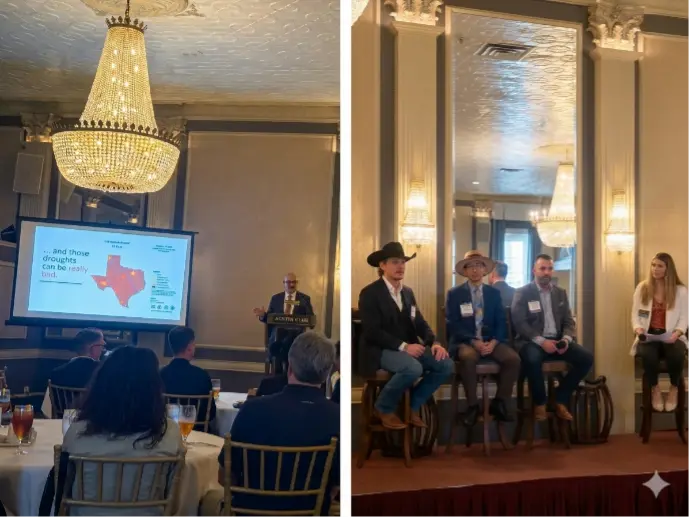
Thank You for Attending February’s Water Policy Event
February’s Water Policy Luncheon was kicked off with a comprehensive overview by Jeremy Mazur (who handles policy for Texas 2036) illustrating the water infrastructure challenges facing the State of Texas. The overview was followed by a dynamic and comprehensive panel discussion featuring Hays County Commissioner Walt Smith, Dr. Keisuke Ikehata (Texas State University) and Georgetown Mayor Pro-Tem Kevin Pitts. Each panelist interacts with water infrastructure in different ways, whether negotiating CCN territories, sitting on water boards, or researching innovative ways to solve the supply and infrastructure problems. NAIOP will continue to provide education around this topic and other legislative priorities to drive growth in Central Texas.
Legislative Updates
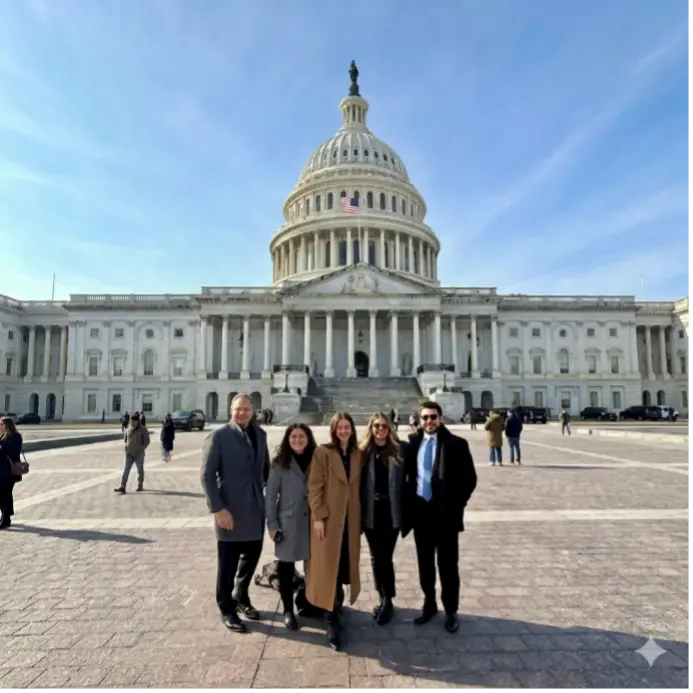
Federal Updates: NAIOP in DC on Capitol Hill
Representatives from NAIOP Austin policy committee met with congressional representatives and senators that represent central Texas on the national stage. Discussions included advocating for federal infrastructure funding and tax policy for residential re-use. NAIOP Austin has continued follow-up and is closely tracking possible legislation, especially those focusing on energy infrastructure.
State Updates
Water Infrastructure Funding (SB 7, HB 500, Prop 4)
For the past many years, utility districts throughout Texas have been struggling to approve requests for “Will Serve” letters due to lack of long-term water sourcing. This has restricted supply and consequently driven up the cost of real estate.
In response, the citizens of Texas and their state legislature effectively “unlocked” development in water-scarce regions by funding new water sources. Through these changes, the State of Texas operationalized the largest dedicated investment in water infrastructure in its history.
Here’s everything you need to know:
Effective June 22, 2025, House Bill 500 allocated $2.5 Billion to the Texas Water Development Board (TWDB) to jump-start major water infrastructure and supply projects immediately. These funds are not dependent on future tax revenues. These funds will be allocated to new projects, legislatively earmarked projects, and general administration.
Effective January 1, 2026, Senate Bill 7 (and Proposition 4) allocates future tax revenues to fund new water infrastructure projects over the next 20 years. Specifically, the State Comptroller is authorized to transfer $1 Billion annually from state sales tax revenue directly into the Texas Water Fund managed by the TWDB. The first $1 Billion transfer occurred at the start of 2026.
Unlike previous funding efforts that focus on conservation, this new legislation focuses on creating new sources of water. To that end, a minimum of 50% of the funds are ring-fenced exclusively for projects that create new water, including desalination plants, aquifer storage, and produced water treatment (treating water from oil and gas production). The remaining funds go toward fixing aging municipal pipes (loss mitigation) and rural water assistance.
Application for disbursements can be made through grants or low-interest loans. Applications can only be made by Municipal Utility Districts (MUDs), Water Control and Improvement Districts (WCIDs), Fresh Water Supply Districts (FWSDs), Cities, Counties, and River Authorities. Districts with “shovel-ready” projects for new water sources will be prioritized.
Foreign Ownership Restrictions (SB 17)
Effective September 1, 2025, Senate Bill 17 prohibits the purchase of Texas real property by governmental entities, companies, or citizens domiciled in designated “foreign adversary” countries (currently China, Russia, Iran, and North Korea). While this law imposes strict bans on foreign state-controlled ownership, it includes critical protections for fair housing: U.S. Citizens and Lawful Permanent Residents (Green Card holders), and entities owned or controlled by them, are fully exempt from this ban, regardless of their country of origin. This ensures that while national security risks are mitigated, the Texas market remains open to lawful individual residents and investors.
Minimum Residential Lot Size Bill (SB 15)
Effective September 1, 2025, Senate Bill 15 (SB 15) prohibits major Texas municipalities, specifically those with over 150,000 residents in counties of at least 300,000, from requiring residential lots to be larger than 3,000 square feet in new developments of five acres or more. Aimed at increasing the supply of “attainable” starter homes, the law further strips cities of the ability to impose restrictive setbacks, excessive parking requirements, or height limits on “small lots” (4,000 square feet or less), though it maintains protection for environmental safety, HOA deed restrictions, and existing neighborhoods. By standardizing these smaller lot sizes across the state’s urban hubs, the bill effectively overrides local zoning powers to facilitate higher-density single-family housing that was previously blocked by “large-lot” mandates.
Local Updates
Municipal Development Code Reviews Continue Across Central Texas
In 2026, NAIOP Austin Public Policy Committee will continue its engagement with several Central Texas municipalities as they update their development codes. Our goal is simple: ensure the commercial real estate community has a strong, informed voice in shaping regulations that impact project feasibility, timelines, and regional growth.
City of Georgetown: Provided recommendations on a minor development code update including tree, zoning, and architecture requirements. The update of the code was approved by city council with several NAIOP comments being incorporated. A more robust code update is coming down the pike, and we are assembling the team for review.
City of Hutto: Provided recommendations on a major development code rewrite, including zoning procedures, landscaping and criteria manuals. The draft code is still in-process, and our expectation is that there will be another round of review and comment.
City of San Marcos: Commented on zoning, subdivision and development processes. The draft code is still in-process and has not yet been passed.
City of Pflugerville: Pflugerville is preparing its development code update. NAIOP Austin is assembling the technical review team, and early participation is encouraged.
We are seeking NAIOP members (developers, land-use attorneys, engineers, architects, landscape architects, planners, and policy professionals) to assist with upcoming reviews. Even small commitments are helpful and strengthen our feedback. If interested, please reach out to Amanda Brown.
Onboarding Public Policy Consultant
We are pleased to announce that NAIOP Austin has officially engaged HMWK to lead our strategic government affairs and legislative advocacy efforts. With over two decades of experience navigating the complexities of the Texas Legislature and federal policy, HMWK brings a wealth of expertise in legislative strategy, regulatory action, and coalition building. Their team of veteran strategists, including John Kroll, Seth Winick, Anthony Haley, and Clint Magee, specializes in translating organizational goals into impactful public affairs campaigns. This partnership will ensure our interests are effectively represented at the nexus of policy and politics, allowing us to better anticipate legislative shifts and advocate for the resources and reforms essential to our mission.
Here is some background on each of their strategists:
-

John Kroll
Shareholder
John Kroll leads the firm’s tax and real estate development practice, specializing in tax incentives, project financing, and economic development. With more than 20 years of experience, he has secured millions in incentives for projects across the U.S. and frequently advises legislators on tax policy. A Baylor University graduate, John lives in Dripping Springs and has served on the City Council and several economic development boards.
-

Seth Winick
Shareholder
Seth Winick is a policy strategist specializing in advocacy, communications, and coalition leadership. He advises public and private organizations on issues including education, technology, energy, housing, and healthcare. A former Texas Legislature staffer and national government relations leader for the American Cancer Society, Seth has helped launch major advocacy organizations and policy coalitions. He is active in several Central Texas nonprofit boards and is a graduate of Texas Christian University.
-
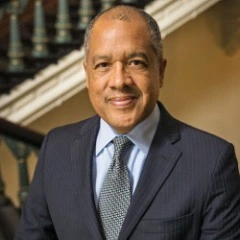
Anthony Haley
Shareholder
Anthony Haley provides strategic counsel to businesses, nonprofits, and local governments, drawing on more than 30 years of leadership at the Texas Capitol. A former chief of staff and legislative advisor who has served both parties in the House, Senate, and Supreme Court, he founded HMWK in 2004. His work spans healthcare, energy, transportation, economic development, and public policy.
-
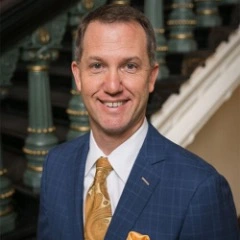
Clint Magee
Vice President
Clint Magee is a seasoned policy professional with more than 20 years of experience working in and around the Texas Legislature. A former Texas House chief of staff, he now advocates complex policy and property tax issues for clients. Clint is a University of Texas graduate and an active supporter of Blood Cancer United in Central Texas.
In an effort to help NAIOP Policy get better coverage and direction for policy efforts, we ask that you kindly take a couple minutes to complete the survey link below to let us know of any potential relationships with legislators or existing issues to address.
Sponsors
-
Founding Sponsors




-
Platinum Sponsors




-
Gold Sponsors